
By Anna Bonelli
March 26. 2025
NEW LONDON, Conn. — Funding cuts forced addiction recovery centers to close in Connecticut and nationwide, leaving many without critical support.
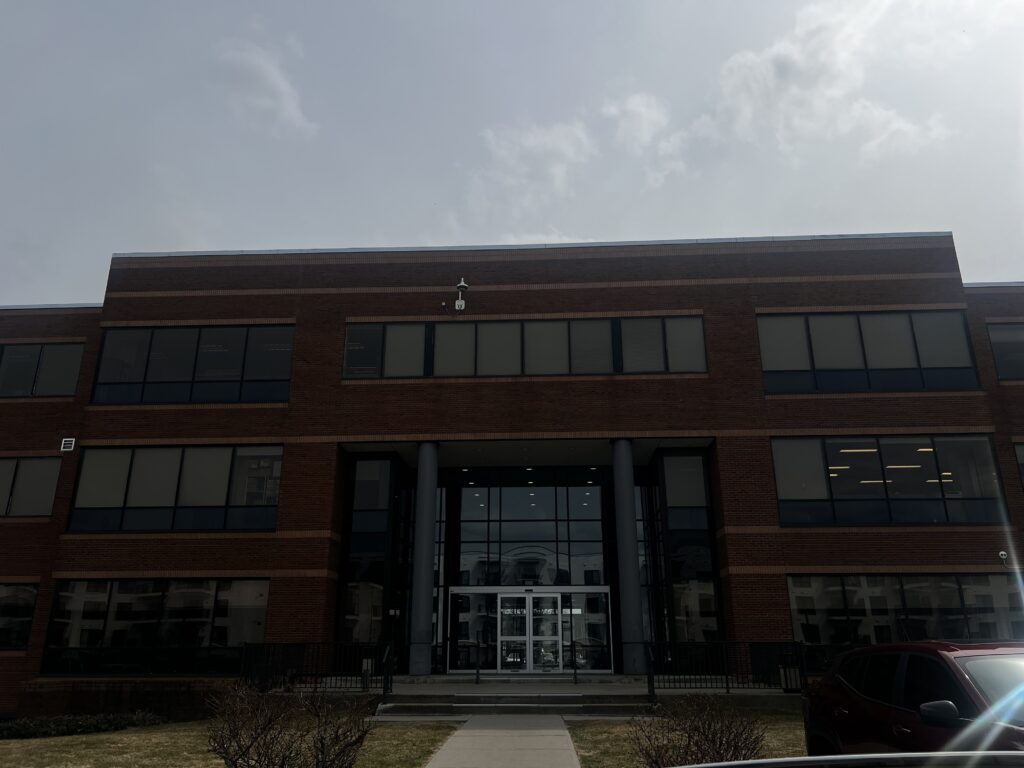
The Connecticut Community for Addiction Recovery center in New London, Connecticut, is pictured on March 26, 2025. The facility is among several facing potential closure due to funding challenges. (Photo by Anna Bonelli)
NEW LONDON, Conn. — Rebecca Allen watched as funding cuts forced addiction recovery centers to close in Connecticut and nationwide, leaving many without critical support.
At the Connecticut Community for Addiction Recovery, the Danbury, New London, and Torrington locations received emergency state funding in February after a federal grant expired. The state allocated $300,000 to keep the centers open until June 30, but without further funding, they could close by July, underscoring a growing national issue.
Rebecca Allen, the director of recovery advocacy at the Connecticut Community for Addiction Recovery, described the situation as a wake-up call.
“These centers are more than just a place for treatment, they are lifelines for people that are recovering,” she said in a telephone interview on March 11.
Addiction recovery centers provide support services for individuals overcoming substance use disorders. Unlike detoxification programs or inpatient rehabilitation facilities, these centers offer peer support, counseling, and resources to help people maintain sobriety. Some are residential programs, while others operate as outpatient facilities providing medication-assisted treatment.
In Connecticut, addiction recovery centers can be accessed through referrals from healthcare providers, social workers, or self-enrollment. Many rely on state and federal funding to remain operational.
Federal funding for addiction recovery programs has been inconsistent for years. As the drug crisis worsens, recovery centers that rely on government aid are struggling.
In 2024, Connecticut allocated $20 million to addiction services, falling short of the estimated $30 million needed to fully fund the programs. This shortfall has forced recovery centers to limit services or face potential closure after the fiscal year.
A report by the Substance Abuse and Mental Health Services Administration found that 60 percent of addiction recovery centers across the United States experienced funding shortages in 2023. The expiration of COVID-19 relief funds has exacerbated the crisis, leaving many centers scrambling to stay open.
“It’s a lot easier to get people to donate to puppies and children. People are less inclined to donate to individuals recovering from drug and alcohol addiction,” Allen said.
Pamela Bartolotta, a radiation therapist at Hartford Hospital, said the closure of addiction recovery centers in Connecticut could have devastating effects on patients receiving cancer treatment.
“If these patients don’t receive the proper care for their addiction, they certainly won’t fulfill their responsibility to show up for their treatments,” she said in a telephone interview on March 26.
“As a healthcare worker, I have seen firsthand how important addiction resources are for these individuals. Recovery support plays a huge role in their mental health and gives them a reason to show up to their medical appointments.”
Pamela Bartolotta also emphasized the broader impact on society.
“If people do not receive addiction services, they will have to search for treatment out of state, which increases the cost of care. So many people will be affected if funding is decreased.”
Many states depend on federal grants for addiction recovery centers, but funding has been inconsistent in recent years. In 2020, the federal government provided $10 billion in grants for addiction recovery services, but that amount dropped by 15 percent in 2023 after pandemic relief funds expired.
This reduction has affected states like Connecticut, where the overdose crisis continues to rise. According to the National Institute on Drug Abuse, there were 2,398 overdose deaths in Connecticut in 2022, a 15 percent increase from 2021. The number of individuals entering treatment has also increased, making it difficult for addiction recovery centers to keep up with demand amid financial cuts leaving them turning people away.
States such as California and Massachusetts have allocated more money to addiction recovery services in their budgets compared to Connecticut. According to data from Rehabs.com, California leads the nation in mental health expenditures, dedicating approximately $6.76 billion annually. Massachusetts also invests heavily in substance use programs, with its Fiscal Year 2025 budget allocating substantial funds for comprehensive prevention, intervention, and recovery services according to a report from the Massachusetts budget summary.
Connecticut’s investment in addiction services has been comparatively lower. In 2024, the state allocated $20 million to addiction services, falling short of the estimated $30 million needed to fully fund these programs. Connecticut has recently taken steps to enhance funding for addiction recovery.
In January 2025, Governor Ned Lamont announced a $58.6 million investment, sourced from settlements with pharmaceutical companies, to support a new program providing stable housing and recovery support for individuals facing both opioid use disorder and homelessness.
These disparities in funding highlight the challenges Connecticut faces in matching the financial commitments of states like California and Massachusetts toward addiction recovery services. Other states have struggled to maintain services, leading to a disparity in access to addiction recovery resources.
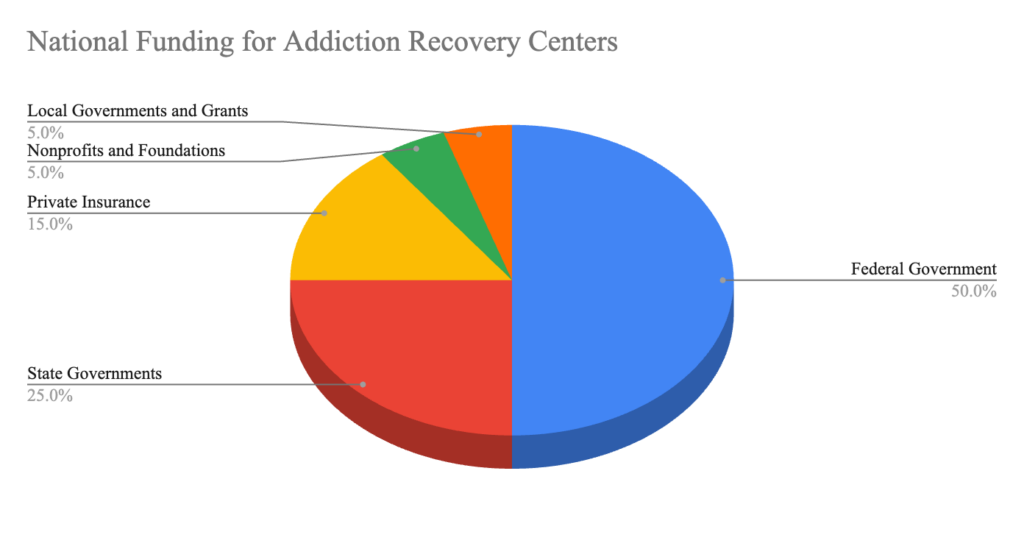
A pie chart illustrating the distribution of funding for addiction recovery services in the United States reveals that the federal government is the largest contributor, accounting for approximately 50 percent of the total funding. State governments provide about 25 percent, while private insurance companies cover 15 percent of the funding. Nonprofits and foundations contribute 5 percent, with local governments and community grants providing a similar share.
Both state and federal lawmakers are exploring solutions to secure long-term funding for addiction recovery programs. Some states, including Connecticut, are considering reallocating funds from other areas of the budget to support addiction services.
Several proposals at the state and federal levels aim to establish stable funding sources. In 2023, the Substance Use Disorder Prevention That Promotes Opioid Recovery and Treatment for Patients and Communities Act reauthorization looked to extend federal funding for substance use disorder programs. Connecticut lawmakers are also evaluating proposals to address budget constraints affecting addiction recovery centers.
In 2022, according to the Centers for Disease Control and Prevention, 107,000 Americans died from drug overdoses, marking a record high at the time. Without stable funding, addiction recovery centers may struggle to keep their doors open, leaving those in need with fewer options for support.
Contact
Rebecca Allen
(860) 377‑8745
Pamela Bartolotta
(860) 235‑2367
Sources
National Institute on Drug Abuse
Substance Abuse and Mental Health Services Administration
https://www.samhsa.gov/grants/block-grants/subg?utm_
https://www.samhsa.gov/sites/default/files/samhsa-fy-2022-bib.pdf?utm_
National Association of Addiction Treatment Providers
Massachusetts Government Budget Summary
Rehabs Data Site
https://rehabs.com/explore/mental-health-spending-by-state-across-the-us/?utm_
CT Government
Click to access opm-2023-fiscal-accountability-report-final.pdf

